Anders Fogh Rasmussen - Biography
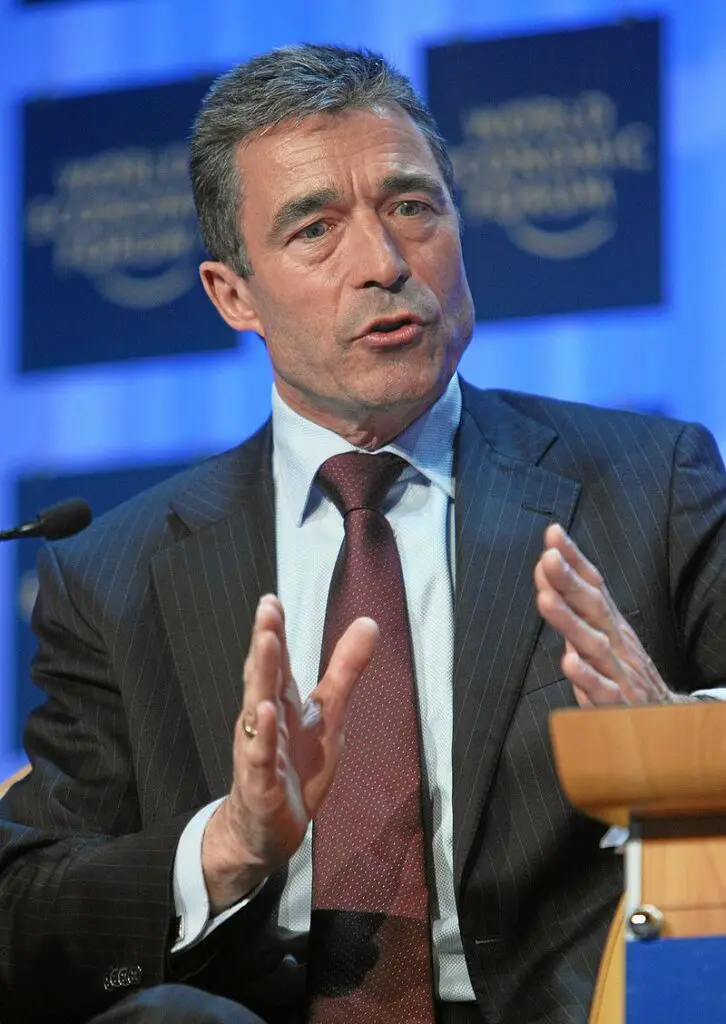
Anders Fogh Rasmussen has been one of the defining figures in European and international politics for more than three decades. As former NATO Secretary General, Prime Minister of Denmark, Danish Minister for Economic Affairs, and long-serving Member of Parliament, he brings exceptional experience at the intersection of politics, business, security, and international cooperation.
His political career began at an early age: in 1978, at just 25, Anders Fogh Rasmussen was elected to the Danish Parliament, becoming its youngest member at the time. In 1987, he assumed his first government role, serving first as Minister for Taxation and later as Minister for Economic Affairs. In this capacity, he led Denmark’s negotiations on the European Union’s Economic and Monetary Union.
After his Danish Liberal Party moved into opposition in 1993, Fogh Rasmussen became one of the leading voices in Danish politics. He led the political opposition and, in 1998, was elected chairman of his party. In the 2001 parliamentary elections, he guided the Liberal Party to a historic landslide victory, making it the largest party in the Danish Parliament — a position that had been dominated by the Social Democrats since the 1920s.
Anders Fogh Rasmussen is known for delivering straight-forward messages on the current geo-political situation, global trade relationships, foreign policy and power balances.
During his tenure as Prime Minister, Anders Fogh Rasmussen overhauled the tax and pension systems to ensure a historic increase in the labour supply to sustain the growing Danish economy. Meanwhile, his government put education, research and innovation on the agenda to prepare Denmark for the challenges of globalization. A strong advocate for the rules-based international order and universal liberal values, Fogh Rasmussen placed Denmark on the world stage by engaging in international missions for the promotion of democracy and the fight against terrorism. His government was re-elected in 2005 and 2007 respectively, and he held the position as Prime Minister until he was elected as future NATO Secretary General in April 2009.
Anders Fogh Rasmussen Lecture Topics
- Technology, AI and geopolitics: new frontiers in the battle for global Leadership
As the United States and China vie for global influence, technology will be central to the balance of power. 5G and artificial intelligence will bring major geopolitical challenges and present ethical and existential questions that must be tackled, from availability and use of data, to the development of fully autonomous weapons systems. Drawing on his own experiences as Secretary General of NATO and founder of the Alliance of Democracies foundation, Anders Fogh Rasmussen examines the influence of technology on geopolitics, and makes the case for more cooperation among democracies. And as a co-chair of the Transatlantic Commission on Election Integrity – a group he co-founded with Joe Biden – he discusses how technology can be deployed to undermine and divide democracies.
- The changing geopolitical landscape – risks and opportunities for alliances of states, countries and financial institutions
The last two years brought significant change to the world’s existing geopolitical structures, and these years are likely to increase their complexity even more, causing financial investors to be additionally meticulous. This new climate requires a solid basis for balancing risk and reward. In this presentation, Anders Fogh Rasmussen explores the ever-changing geopolitical environment with a sharp focus on the intersection between multinational business and trade, security and stability, economic growth, innovation, and governance. Anders Fogh Rasmussen describes the impact of changing US Administrations on global cooperation, the growing tensions with China from the US and the EU, the impact of the global pandemic, and the increasing need for a transition to green energy as the climate crisis wreaks havoc across the globe.
- US trade and economic policy – A future full of risks and opportunities
Drawing on his own experiences as Prime Minister of Denmark and Secretary General of NATO, Anders Fogh Rasmussen examines Donald Trump’s leadership on the world stage and its role in the changing global order. Warning against American isolationism, he explores the geopolitical risks as well as the opportunities of Mr. Trump’s presidency. Critical, but hopeful, he argues political observers should focus more on the underlying political dynamics of Trump’s presidency instead of squawking nervously about every tweet.
- Global leadership, responsibility and international negotiations
Drawing on his eight years as Prime Minister of Denmark and five years as Secretary General of NATO, Anders Fogh Rasmussen will deliver accurate and useful points on leadership and international negotiation. In his time as Secretary General of NATO, Anders Fogh Rasmussen transformed the organization into being fitter, faster and more flexible. Fogh Rasmussen has gained an extensive experience driving change and transforming international organisations which he will share with the audience in this presentation. Audiences will receive unmatched, practical insights that prepares them for future challenges. Besides elaborating on his leadership experiences, Anders Fogh Rasmussen will furthermore present the audience with his approach to international negotiations which he successfully utilized during his time as Secretary General of NATO. Fogh Rasmussen’s approach to negotiations include three specific rules, that can be easily applied to any negotiation.
- The Will to Lead
Drawing heavily on his book, “The Will to Lead”, Anders Fogh Rasmussen fiercely defends freedom and the importance of America’s global leadership in this impassioned presentation, offering an astute analysis of current geopolitical events. From the Iranian nuclear deal, to the invasion of Ukraine, to the Arab Spring and turmoil in the Middle East, Fogh Rasmussen is forceful but even-handed in his sharp analysis of the decisions made by United States leadership. Critical of the policy to “lead from behind” in foreign affairs, he argues that America must act as the world’s policeman, especially in a world increasingly more dangerous and unstable. Anders Fogh Rasmussen proposes a roadmap for an Alliance of Democracies between America and Europe, joined by other liberal democracies in the fight against tyranny. Weaving together wisdom, history and his personal experiences, this presentation will captivate politically involved audiences on both sides of the aisle.